
54 young people from 14 countries debate sustainability, volunteering and the future of Europe in Alicante
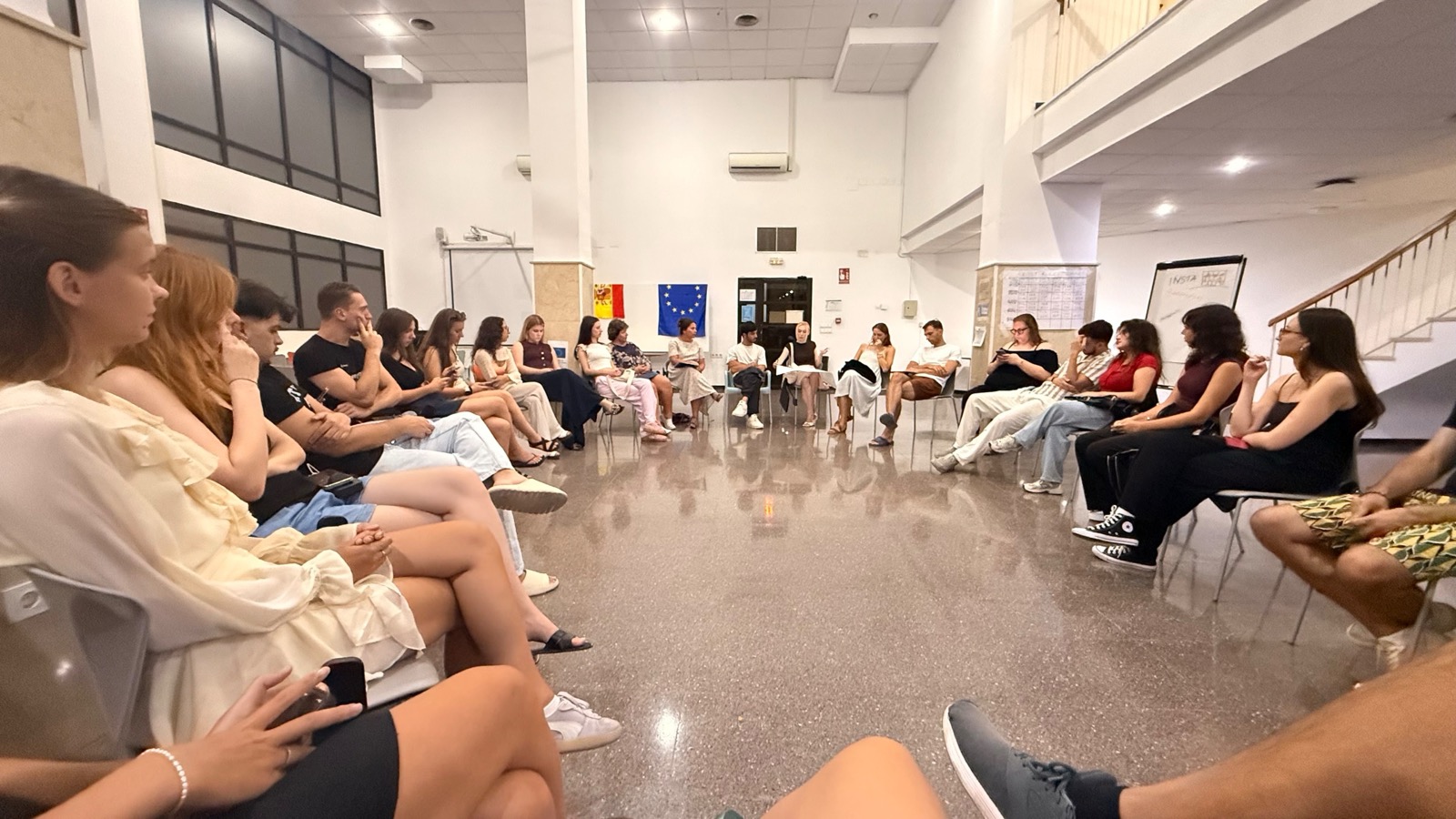
On 17 and 18 September, the La Florida Youth Hostel in Alicante hosted the Civic Incubator Lab organised by PILCROW as part of COMPASS, a project funded by the European Union’s CERV programme. COMPASS aims to involve young people, especially those with fewer opportunities, in the debates on the EU’s economic and political future.
The two sessions brought together 54 people: young people, youth workers and educators. They came from 14 countries: Spain, Türkiye, Italy, North Macedonia, Romania, Austria, Serbia, Bulgaria, Estonia, Slovakia, Poland, Greece, France and the Czech Republic. This international mix was possible thanks to the cooperation of a vocational training centre and the youth centre, which were hosting international participants and volunteers on those days.
Each day opened with a talk by an expert, followed by an open exchange in small groups and, finally, a workshop using the World Café method.
What the participants said
The idea heard most often was that young people should not have to choose between economic stability and sustainability. For many of them, precarious work and the cost of living come first, so sustainable choices need to be accessible and affordable.
Participants also noted that the chances to act sustainably are not the same across Europe. Access to environmental education, sustainable transport, green jobs or community initiatives depends a great deal on where a young person lives. That is why they called for European policies that take those differences into account.
On responsibility, they agreed that individual habits matter. Awareness alone is not enough, though: governments, companies and European institutions have to lead structural change and remove the barriers that stop people from taking action.
Discussing the green transition and European competitiveness, participants saw green innovation as a source of jobs for new generations, on one condition: the transition must be socially fair, and its costs must not fall on particular countries, sectors or workers.
Volunteering was valued as a way to gain skills, environmental awareness and active citizenship. Participants also pointed to obstacles such as lack of time, lack of information and financial difficulties. And they were clear that volunteering should complement the responsibility of institutions, not replace it.
Next steps
The conclusions from Alicante will be added to those of the Civic Incubator Labs held in the other countries of the consortium. In Spain they will be the starting point of the National Competitiveness Dialogue that PILCROW will organise, where young people will speak directly with policymakers. They will then travel to the Forum in Brussels and feed into the Youth Strategy Paper on EU competitiveness.
COMPASS (COMpetitiveness Policy for Accelerating Sustainable Solutions) is coordinated by Stand Up For Europe (Belgium), with PILCROW as the Spanish partner.
Funded by the European Union. Views and opinions expressed are those of the author(s) only and do not necessarily reflect those of the European Union or the granting authority.