
Testing the TOKENISM eLearning Platform: Building the Tools to Combat Tokenism in Youth Work
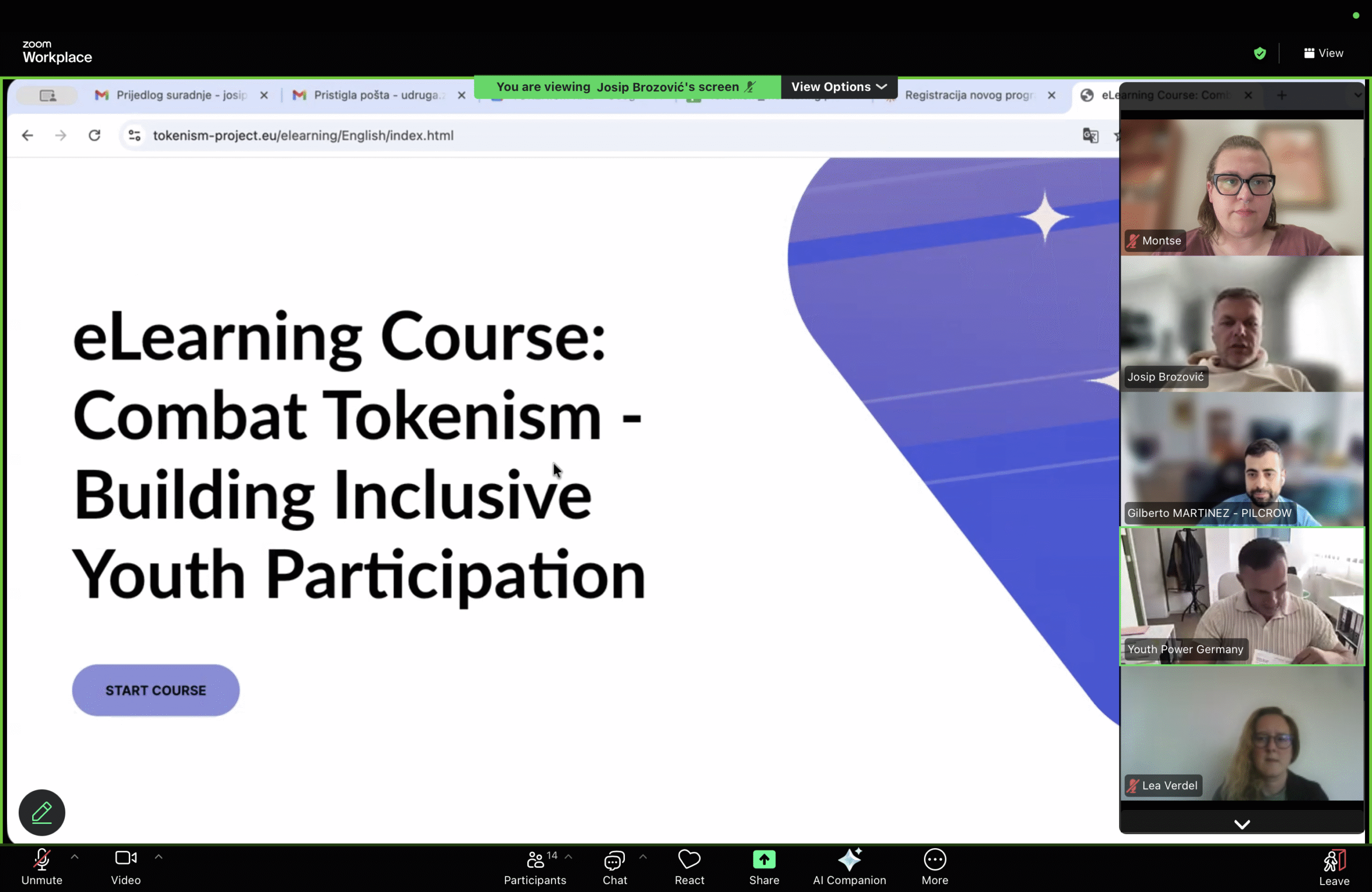
The TOKENISM project has reached a key milestone: the online testing phase of its eLearning course “Combat Tokenism – Building Inclusive Youth Participation.” Youth workers and educators from across Europe joined a collaborative online session to review and evaluate the platform before its official launch.
The course, has been developed to address a widespread but often unaddressed challenge in youth participation: tokenism, the practice of including young people in decision-making processes in a superficial way, without giving them real voice or decision-making power.
What the course covers
The eLearning platform is structured around three core modules that guide learners through the theoretical and practical dimensions of inclusive participation:
- Module 1 – Understanding Tokenism and Inclusion
- Module 2 – The Participation Ladder
- Module 3 – Intersectionality and Representation
- Module 4 – Co-Creation and Shared Decision-Making
- Module 5 – Implementation and Sustainability
Each module combines visual content, reflective questions and downloadable tools (including resources such as the Power Mapping Template) designed to help youth workers apply the learning directly in their organisations.
A collaborative testing process
The online testing session brought together professionals from partner organisations in Spain, Germany, Croatia and other participating countries. Participants navigated the platform live, reviewed individual lessons, and shared feedback on content, usability and pedagogical approach.
This participatory evaluation is central to TOKENISM’s methodology: the course is not just designed for youth workers, but with them, ensuring that the final resource reflects real needs and contexts across different national settings.
The feedback gathered during this testing phase will inform the final adjustments to the platform before its public release. The TOKENISM eLearning course will be freely available as an open educational resource for youth workers, trainers, organisations and anyone working to build more equitable and genuinely inclusive spaces for young people.
The project is co-funded by the European Union.